
Subtotal $0.00

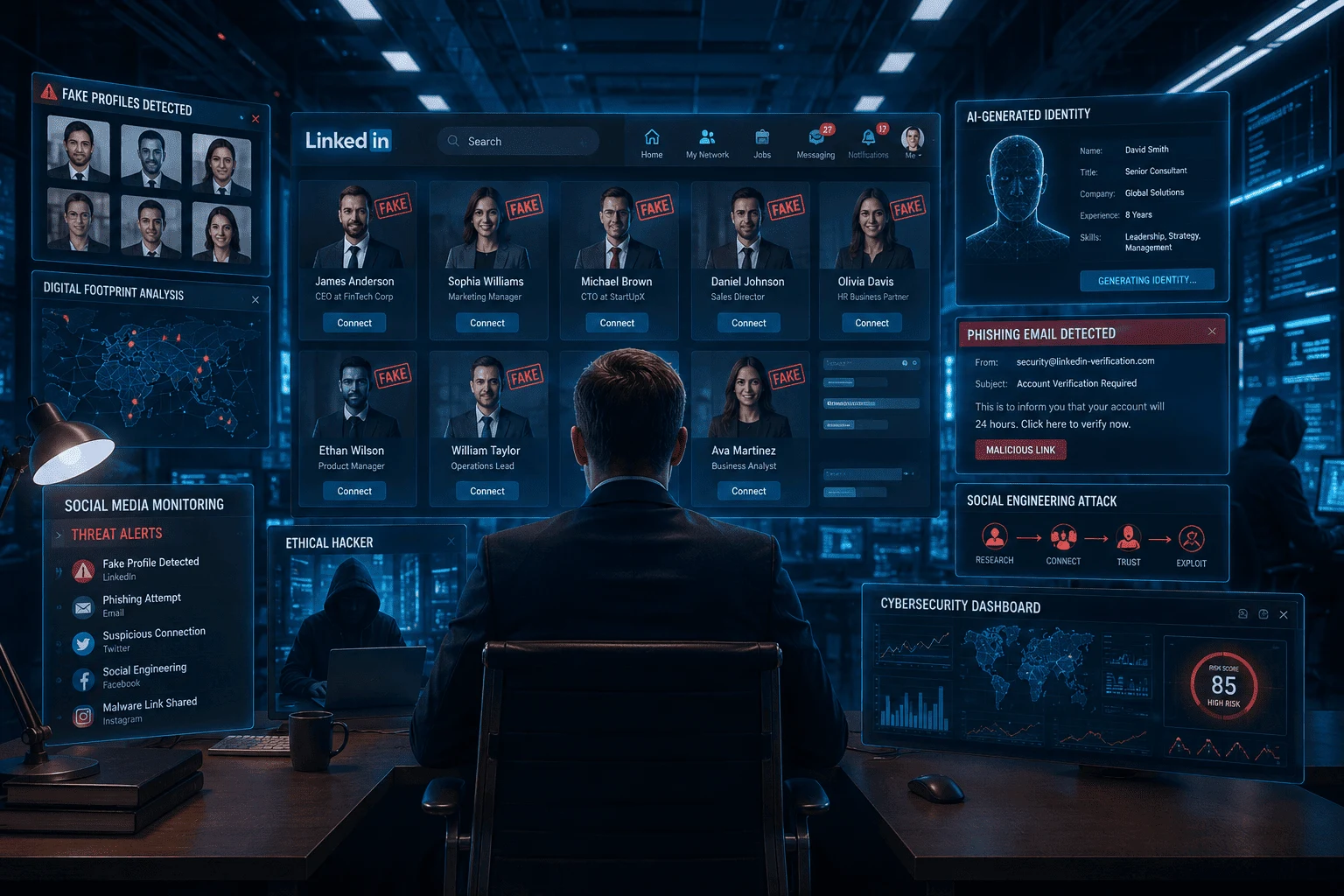
LinkedIn today is the world’s largest professional networking site and connects millions of professionals, recruiters, executives, entrepreneurs, and businesses. LinkedIn is used by companies to attract talent, generate business leads, build partnerships, and build their brand authority. But its popularity also makes it one of the most attractive platforms for cybercriminals. Fake LinkedIn profiles are now extensively used to launch cyberattacks, phishing campaigns, social engineering scams, identity theft, corporate espionage, and business email compromise (BEC) attacks.
LinkedIn attacks differ from other cyberattacks because they target people, not systems, and do not use malware or technical vulnerabilities. Cybercriminals pose as recruiters, CEOs, HR managers, investors, or industry professionals and create fake profiles that look very real to earn the trust of their victims. Once they establish a connection, attackers use manipulative tactics to steal sensitive information, deploy malware, gather employee information, or dupe victims into financial fraud.
Businesses in global technology and financial hubs such as New York, London, Singapore, Dubai, Toronto, Sydney, Bangalore, Mumbai, Delhi and Hyderabad are an increasingly attractive target due to large professional networks and valuable business information. Therefore, organizations are adopting social media monitoring tools, ethical hacking services, cyber threat intelligence, cybersecurity monitoring solutions, online reputation management, and employee security awareness training to reduce the risk from fake LinkedIn profiles.
In this guide, you will discover all you need to know about fake LinkedIn profiles – how they are made, how cybercriminals use them to execute attacks, red flags every professional should be aware of, and cybersecurity strategies that businesses should implement to stay protected.
Why LinkedIn Is a Prime Target for Cybercriminals
LinkedIn is different from other social media platforms because users voluntarily share professional information, including job titles, company names, work history, education, skills, certifications, business email addresses, and industry connections. This information is extremely valuable for cybercriminals because it helps them create personalized attacks that appear legitimate.
Attackers use LinkedIn to identify decision-makers, executives, finance teams, HR professionals, IT administrators, and employees with access to sensitive systems. By studying public profiles, cybercriminals can understand organizational structures, business relationships, and communication styles, making their phishing campaigns and social engineering attacks far more convincing.
For organizations in major business centers such as London, New York, Singapore, Dubai, Bangalore, and Mumbai, LinkedIn has become one of the most common starting points for targeted cyberattacks. Companies therefore integrate social media monitoring, cyber threat intelligence, ethical hacking assessments, and cybersecurity awareness programs to reduce exposure.
- LinkedIn contains valuable professional information.
- Cybercriminals target executives and employees.
- Public business data makes attacks more convincing.
- Personalized attacks are more successful.
- Businesses need continuous social media monitoring.
What Are Fake LinkedIn Profiles?
Fake LinkedIn profiles are fraudulent accounts created to impersonate real professionals, recruiters, company executives, consultants, or industry experts. Some fake profiles use stolen photographs, AI-generated profile images, fabricated employment histories, and fake recommendations to appear authentic.
Many cybercriminals spend weeks or even months building credibility before launching an attack. They regularly post industry content, interact with legitimate users, and connect with hundreds of professionals to appear trustworthy.
These fake accounts are commonly used for:
- Social engineering attacks
- Phishing campaigns
- Business email compromise
- Malware distribution
- Corporate espionage
- Identity theft
- Financial fraud
Modern social media monitoring tools, cyber threat intelligence platforms, and online reputation monitoring services help organizations identify fake accounts before they can cause significant damage.
How Fake LinkedIn Profiles Are Used for Cyber Attacks
Cybercriminals usually don’t strike right away after setting up fake accounts. Rather, they will use a well thought out strategy to try to gain trust and get information.
They start by sending connection requests to employees of selected organizations. Once they are accepted, they study conversations, company updates, shared documents and employee interactions. Attackers have learned to collect enough information over time to launch convincing phishing campaigns or social engineering attacks.
Some fake recruiters will offer you great jobs with malicious attachments. Others pose as investors or business partners looking for confidential documents. Attackers often try to move conversations from LinkedIn to email or messaging apps later, where they attempt to steal credentials or commit financial fraud.
Organizations that use ethical hacking services, social media monitoring solutions, cybersecurity monitoring tools and cyber threat intelligence are far better placed to identify these sophisticated attacks before they get out of hand.
Phishing Through Fake LinkedIn Profiles
One of the most common ways to attack is via LinkedIn phishing.
Cybercriminals send messages that claim to provide:
High paying job openings
Business alliances
Investment opportunities
Invitations to conferences
Networking opportunities with professionals
They send victims links that lead to fake login pages or malicious websites in order to steal credentials. Some messages have infected PDF files, resumes or presentations with malware.
Modern cyber threat intelligence, social media monitoring, email security solutions, and ethical hacking assessments can better prepare organizations to identify these phishing campaigns.
Business Email Compromise (BEC) Attacks
The first stage of Business Email Compromise (BEC) is often fake LinkedIn profiles.
Attackers have been using LinkedIn to identify executives and finance employees and then send convincing emails asking for urgent payments or confidential information. The attacker already knows company relationships, so these emails often seem authentic.
Most companies worldwide lose millions annually to BEC attacks. Organizations are more and more combining social media monitoring, cyber threat intelligence, email security, ethical hacking services and identity verification to lower these risks.
How Ethical Hacking Helps Prevent LinkedIn Attacks
Ethical hacking is an important part of the organization’s defense against LinkedIn-based attacks.
Ethical hackers carry out social engineering simulations, phishing assessments, penetration testing and cybersecurity audits to find weak spots in employee awareness and communication processes. These controlled exercises let businesses see how attackers work and shore up security before a real attack.
Organizations that use ethical hacking services, penetration testing services, cybersecurity monitoring, social media monitoring, and cyber threat intelligence build a more robust defense against sophisticated social engineering attacks.
Why Social Media Monitoring Is Essential
Social media monitoring is now one of the most critical cybersecurity practices.
Advanced social media monitoring tools constantly monitor professional networks for fake accounts, brand impersonation, suspicious conversations, phishing campaigns, executive impersonation, and fraudulent activities.
Employees on LinkedIn and other professional social media are often the targets of attackers, so organizations in New York, London, Singapore, Sydney, Dubai, Toronto, Bangalore, Mumbai, Delhi and Hyderabad are increasingly turning to social media monitoring.
Warning Signs of Fake LinkedIn Profiles
Although fake profiles are becoming more sophisticated, several warning signs can help identify suspicious accounts.
Profiles with very few connections, recently created accounts, AI-generated profile photos, limited work history, generic recommendations, unusually attractive job offers, or urgent requests for confidential information should always be treated with caution.
Employees should also verify company email addresses, official websites, and mutual connections before they accept requests from unknown professionals.
Best Practices for Businesses
Organizations should implement a multi-layered cybersecurity strategy to reduce LinkedIn-related threats.
This includes:
- Employee cybersecurity awareness training.
- Multi-factor authentication.
- Social media monitoring tools.
- Ethical hacking services.
- Cyber threat intelligence platforms.
- Email verification procedures.
- Identity validation processes.
- Regular penetration testing.
Combining these technologies significantly reduces the success rate of social engineering attacks.
Frequently Asked Questions
What is fake LinkedIn account?
Fake LinkedIn profiles are fraudulent accounts created to impersonate professionals, recruiters, or executives for cyber crime.
What is the purpose of using LinkedIn by hackers?
LinkedIn offers valuable professional information that helps attackers to launch personalized phishing and social engineering attacks.
How do fake LinkedIn profiles damage businesses?
These can steal credentials, spread malware, conduct Business Email Compromise attacks, and damage brand reputation.
What does social engineering mean?
Social engineering is manipulating people to give up sensitive information or do things that help the attacker.
How can social media monitoring be helpful?
Detects fake profiles, phishing campaigns, brand impersonation, and suspicious online activities.
Can ethical hacking prevent attacks on LinkedIn?
Okay. Ethical hacking tests in a controlled way helps identify security vulnerabilities and improves employee awareness.
Which employees are most often the targets?
Common targets include executives, HR teams, recruiters, finance departments, IT administrators, and sales professionals.
How do employees identify fake LinkedIn profiles?
Look out for incomplete profiles, AI photos, suspicious job offers, limited connections and strange requests.
Why are the businesses located in big cities targeted more?
Companies in cities like New York, London, Singapore, Dubai, Toronto, Sydney, Bangalore, Mumbai, Delhi and Hyderabad have a greater digital footprint and valuable business networks.
What is the best way to defend against LinkedIn cyberattacks?
The best protection comes from combining social media monitoring, ethical hacking services, cyber threat intelligence, employee awareness training, and strong cybersecurity policies.