
Subtotal $0.00

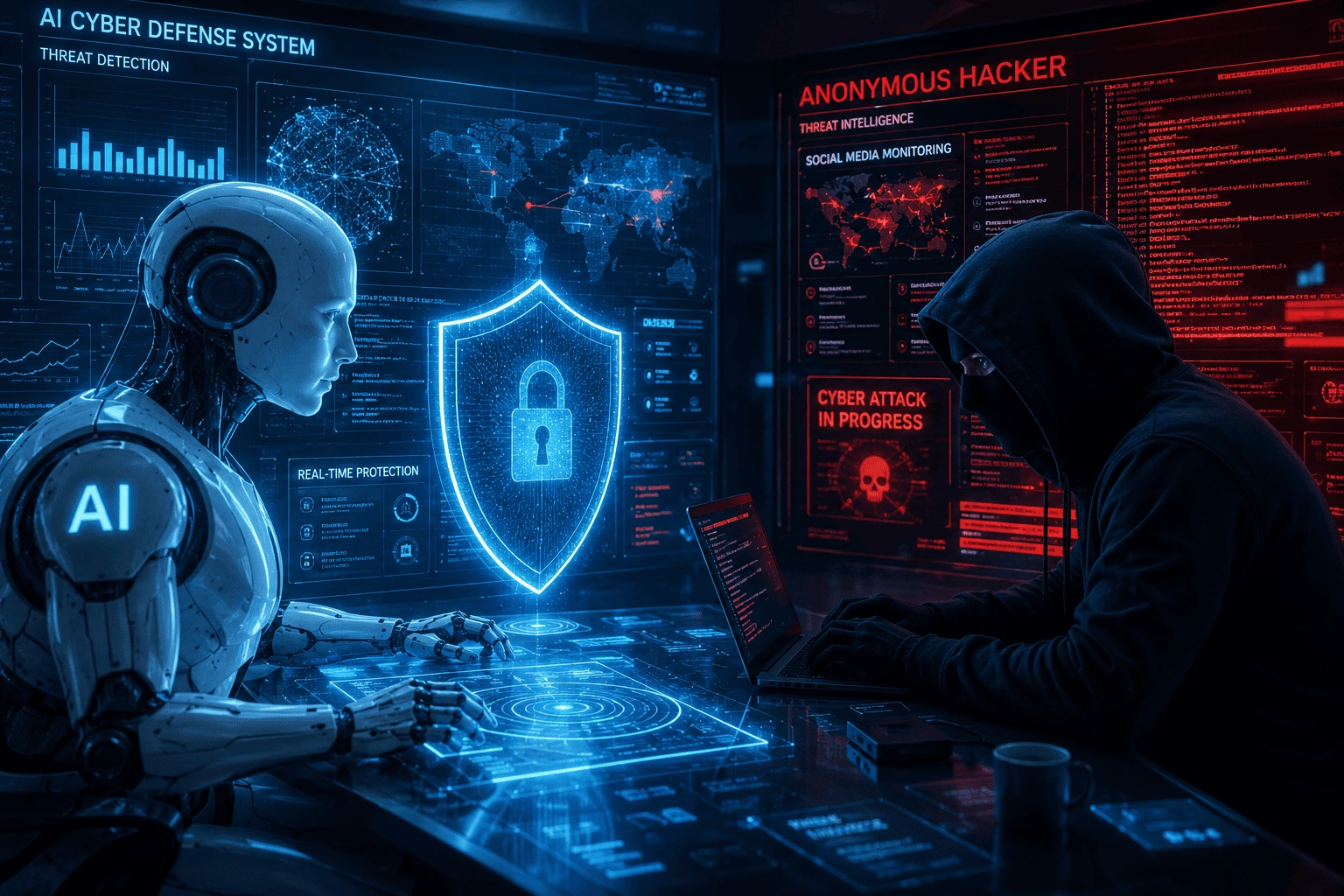
AI vs Hackers: Who Will Win the Cybersecurity Race?
The cybersecurity landscape is evolving faster than ever before. As businesses become more dependent on digital technologies, cloud computing, social media platforms, and online transactions, cybercriminals are finding new ways to exploit vulnerabilities. At the same time, Artificial Intelligence (AI) is transforming how organizations defend themselves against cyber threats. This has created one of the most fascinating battles in modern technology: AI vs Hackers.
Artificial Intelligence is now being used to detect threats, automate security operations, identify vulnerabilities, and strengthen cybersecurity defenses. However, cybercriminals are also leveraging AI-powered tools to launch sophisticated attacks, create realistic phishing scams, develop malware, and automate hacking activities. This growing competition has sparked a global debate about who will ultimately dominate the cybersecurity race.
Businesses worldwide are investing in AI cybersecurity solutions, ethical hacking services, cyber threat intelligence platforms, social media monitoring tools, penetration testing services, and cybersecurity monitoring systems to stay ahead of emerging threats. Understanding how AI and hackers interact is essential for organizations looking to build stronger defenses against future cyber risks.
In this comprehensive guide, we will explore how AI is changing cybersecurity, how hackers are using AI for malicious purposes, the strengths and weaknesses of both sides, and what the future holds for the cybersecurity industry.
Understanding Artificial Intelligence in Cybersecurity
Artificial Intelligence refers to computer systems that can analyze data, identify patterns, make decisions, and perform tasks that traditionally require human intelligence. In cybersecurity, AI is used to process massive amounts of data and identify suspicious activities that might indicate a cyberattack.
Modern AI cybersecurity solutions can detect threats in real time, analyze network traffic, identify malware behavior, and automate incident response. Unlike traditional security systems that rely heavily on predefined rules, AI continuously learns from new data and adapts to evolving threats.
Organizations use AI cybersecurity tools, cyber threat intelligence platforms, ethical hacking services, and security monitoring solutions to improve threat detection and reduce response times. AI has become particularly valuable because cyberattacks are increasing in volume and complexity, making manual monitoring increasingly difficult.
- AI improves threat detection capabilities.
- AI can analyze large amounts of security data quickly.
- AI supports cybersecurity monitoring and automation.
- AI reduces incident response times.
- AI helps organizations identify emerging cyber threats.
How Hackers Are Using Artificial Intelligence
While AI provides significant benefits for cybersecurity professionals, it has also become a powerful tool for cybercriminals. Hackers are using AI to automate attacks, create convincing phishing scams, generate malicious code, and identify security weaknesses more efficiently.
AI-powered cyberattacks are becoming more sophisticated because machine learning algorithms can adapt and improve over time. This allows attackers to bypass traditional security measures and target organizations with greater precision.
One of the most concerning developments is the rise of AI-powered phishing attacks. Cybercriminals can use AI to generate personalized emails, messages, and voice calls that appear authentic. These attacks are often more successful because they exploit human trust and social engineering techniques.
- Hackers use AI to automate cyberattacks.
- AI improves phishing and social engineering campaigns.
- AI helps attackers identify vulnerabilities faster.
- AI-generated malware is becoming more advanced.
- Cybercriminals use AI for large-scale attack operations.
The Rise of AI-Powered Cyber Attacks
The growth of AI technology has led to several new cybersecurity threats. Cybercriminals are increasingly using AI to improve the effectiveness of their attacks and reduce the amount of human effort required.
Some of the most common AI-powered cyber threats include:
AI-Generated Phishing Emails
AI can analyze publicly available information and create personalized phishing messages that appear highly convincing. These messages often mimic communication from trusted sources, making them difficult to identify.
AI Voice Cloning Scams
Cybercriminals use AI to clone voices and impersonate executives, managers, or customer support representatives. These scams are becoming increasingly common in business environments.
AI-Powered Malware
Modern malware can use AI algorithms to adapt to security environments, avoid detection, and improve attack effectiveness.
Automated Credential Attacks
AI can automate password-cracking attempts and identify weak authentication systems more efficiently than traditional methods.
- AI-powered phishing is increasing rapidly.
- Voice cloning scams target businesses and individuals.
- AI malware adapts to cybersecurity defenses.
- Automated attacks improve hacker efficiency.
- Businesses face more sophisticated cyber threats
How AI Is Strengthening Cybersecurity
Despite the risks, AI remains one of the most powerful tools available to cybersecurity professionals. Security teams use AI to identify threats, automate monitoring, and improve overall security performance.
AI cybersecurity systems continuously analyze network activity, user behavior, and system events to identify anomalies that may indicate a cyberattack. These systems can often detect threats before human analysts notice them.
Organizations are also integrating AI into cyber threat intelligence, social media monitoring, ethical hacking services, penetration testing, and cybersecurity monitoring platforms to improve visibility and protection.
- AI improves threat detection accuracy.
- AI automates cybersecurity operations.
- AI supports real-time monitoring.
- AI helps reduce security team workloads.
- AI strengthens cyber threat intelligence.
AI and Ethical Hacking
Ethical hacking has also been transformed by artificial intelligence. Ethical hackers use AI-powered tools to identify vulnerabilities, conduct penetration testing, and simulate cyberattacks more efficiently.
AI helps ethical hackers analyze systems, identify security gaps, and prioritize vulnerabilities based on risk. This allows organizations to address weaknesses before cybercriminals can exploit them.
Modern ethical hacking services, penetration testing services, and vulnerability assessments increasingly rely on AI technologies to improve efficiency and accuracy.
- AI improves penetration testing processes.
- Ethical hackers use AI for vulnerability assessments.
- AI helps identify hidden security weaknesses.
- AI supports proactive cybersecurity strategies.
- AI improves security testing accuracy.
The Role of Social Media Monitoring in the AI Era
Social media has become a major source of information for both cybersecurity professionals and cybercriminals. Attackers often use social media platforms to gather information about potential victims, conduct phishing attacks, and spread malicious content.
Businesses use social media monitoring tools, online reputation monitoring solutions, and cyber threat intelligence platforms to track suspicious activity and identify emerging threats.
AI enhances social media monitoring by analyzing large volumes of content and identifying patterns that may indicate cyber threats or fraudulent activities.
- Social media provides valuable intelligence.
- Attackers use social media for reconnaissance.
- AI improves social media monitoring.
- Businesses can detect threats earlier.
- Monitoring protects brand reputation.
Strengths of AI in Cybersecurity
Artificial Intelligence offers several advantages over traditional cybersecurity methods.
Faster Threat Detection
AI can analyze millions of events and identify threats within seconds.
Continuous Monitoring
AI systems operate 24/7 without interruptions.
Improved Accuracy
Machine learning algorithms improve detection rates over time.
Automation
AI automates repetitive security tasks, allowing analysts to focus on strategic issues.
- AI works continuously.
- AI processes large datasets quickly.
- AI improves detection accuracy.
- AI reduces operational costs.
- AI supports cybersecurity teams.
Strengths of Human Hackers
Despite AI advancements, human hackers still possess unique advantages that technology cannot fully replicate.
Creativity
Hackers can develop new attack methods and adapt quickly.
Strategic Thinking
Human attackers understand psychology and exploit trust.
Innovation
Cybercriminals constantly experiment with new techniques.
Social Engineering
Humans excel at manipulating emotions and decision-making.
- Hackers are highly adaptable.
- Human creativity remains powerful.
- Social engineering relies on psychology.
- Attackers evolve continuously.
Human decision-making is difficult to automate.
Who Has the Advantage?
The cybersecurity race is not simply a battle between AI and hackers. In reality, both sides are using AI technologies to gain an advantage.
Currently, AI provides significant benefits for defenders because it improves threat detection, monitoring, and response capabilities. However, hackers are also becoming more sophisticated and are increasingly adopting AI-powered tools.
The organizations that succeed will be those that combine:
- AI cybersecurity solutions
- Ethical hacking services
- Cyber threat intelligence
- Social media monitoring
- Employee security awareness
- AI benefits both attackers and defenders.
- Human expertise remains essential.
- Cybersecurity requires multiple layers of protection.
- Businesses must stay proactive.
- Continuous improvement is critical.
The Future of AI and Cybersecurity
The future of cybersecurity will likely involve even greater integration of artificial intelligence. AI will become more effective at detecting threats, automating security operations, and predicting cyberattacks before they occur.
At the same time, cybercriminals will continue using AI to develop more advanced attack techniques. This ongoing competition will drive innovation on both sides.
Businesses that invest in AI cybersecurity, ethical hacking services, cyber threat intelligence, social media monitoring, penetration testing, and security awareness training will be better positioned to defend against future threats.
- AI will play a larger role in cybersecurity.
- Cybercriminals will continue adopting AI.
- Threats will become more sophisticated.
- Businesses must remain adaptable.
- Continuous cybersecurity investment is essential.
Frequently Asked Questions
What is AI in cybersecurity?
AI in cybersecurity uses machine learning and automation to detect, analyze, and respond to cyber threats.
Can hackers use AI?
Yes, cybercriminals use AI for phishing attacks, malware development, voice cloning, and automated hacking.
Will AI replace cybersecurity professionals?
No, AI supports cybersecurity professionals but cannot fully replace human expertise and decision-making.
How does AI improve threat detection?
AI analyzes large amounts of data and identifies suspicious patterns faster than traditional systems.
What are AI-powered cyber attacks?
These are cyberattacks that use artificial intelligence to improve efficiency, automation, and success rates.
How does ethical hacking use AI?
Ethical hackers use AI for vulnerability assessments, penetration testing, and cybersecurity analysis.
Why is social media monitoring important for cybersecurity?
It helps identify phishing campaigns, fake accounts, cyber threats, and brand impersonation attempts.
Can AI stop all cyber attacks?
No, AI significantly improves security but cannot eliminate all cyber threats.
Who is winning the cybersecurity race?
Currently, AI gives defenders a strong advantage, but hackers continue to evolve their techniques.
What should businesses do to stay protected?
Invest in AI cybersecurity tools, ethical hacking services, cyber threat intelligence, social media monitoring, and employee security training.
Conclusion
The battle between AI and hackers is shaping the future of cybersecurity. Artificial Intelligence is revolutionizing threat detection, automation, ethical hacking, cyber threat intelligence, and social media monitoring. At the same time, cybercriminals are leveraging the same technology to create more advanced and dangerous attacks.
Rather than asking whether AI or hackers will win, businesses should focus on how they can use AI effectively while maintaining strong cybersecurity practices. Organizations that combine advanced AI technologies, ethical hacking services, cybersecurity monitoring, penetration testing, and employee awareness programs will have the strongest defenses against future cyber threats.
The cybersecurity race is far from over, but one thing is clear: AI will be one of the most important tools in protecting the digital world.