
Subtotal $0.00

Dark Web and WhatsApp Data: Should You Be Worried?
When people hear the term WhatsApp hacking, they usually imagine someone reading private chats or spying on conversations. But in today’s cybercrime world, hacking is not always about breaking encryption — it’s about stealing data that helps criminals take over accounts.
And that’s where the dark web enters the picture.
You may have seen warnings like:
“Your data may be on the dark web.”
“Hackers are selling WhatsApp information online.”
But what does that really mean?
Can your WhatsApp data actually reach the dark web?
And more importantly — are you at risk of WhatsApp hacking because of it?
Let’s break this down in simple, realistic terms.
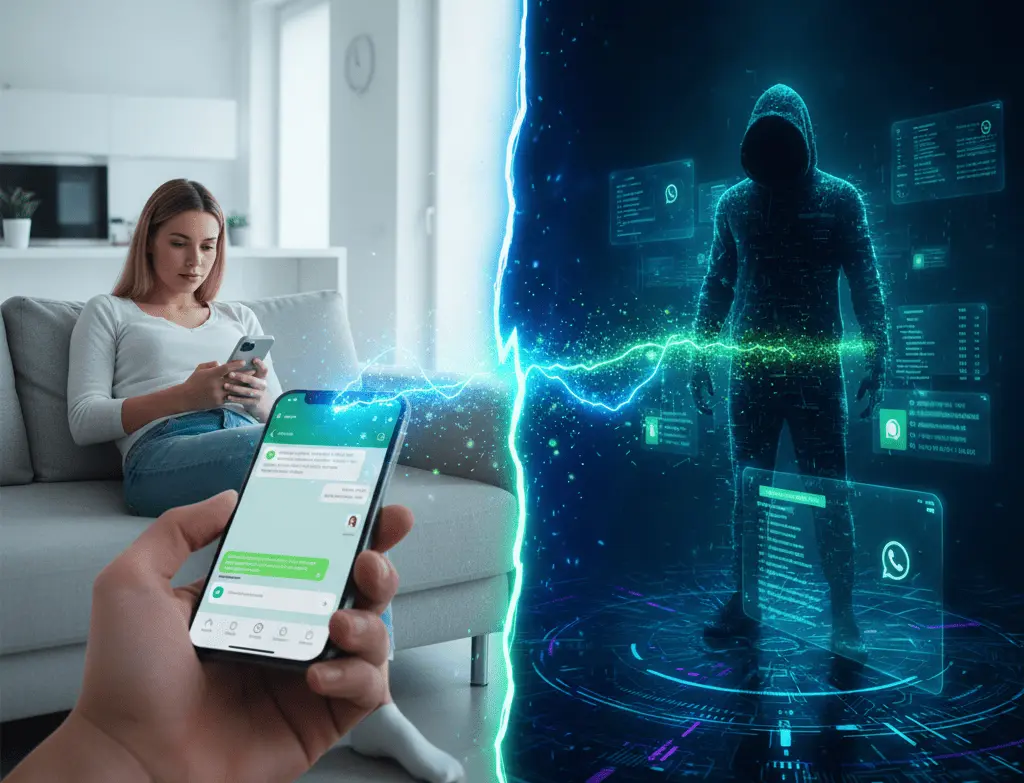
Understanding the Dark Web in Simple Words
The internet has three layers:
- Surface Web – Google, YouTube, news websites
- Deep Web – Private databases, emails, banking portals
- Dark Web – Hidden networks that require special tools like Tor
The dark web itself isn’t illegal, but it has become a hub for cybercriminal activity. Hackers use it to:
- Sell stolen personal data
- Trade hacked social media accounts
- Share malware tools
- Run phishing and scam operations
When we talk about WhatsApp hacking and the dark web, we’re talking about criminal marketplaces where stolen user information is exchanged.
Can Hackers Sell WhatsApp Chats on the Dark Web?
This is one of the biggest myths.
WhatsApp uses end-to-end encryption, meaning messages are scrambled and can only be read by the sender and receiver. Even WhatsApp itself cannot read them.
So no, hackers usually cannot mass-sell your private chats on the dark web.
However…
They don’t need your chats to make money.
They want something more valuable for WhatsApp hacking:
✔ Your phone number
✔ Your email address
✔ Account access details
✔ OTP verification opportunities
✔ Contact lists
✔ Business account data
This kind of data helps criminals take over accounts and run scams — and that information does appear in dark web databases.
How WhatsApp Hacking Connects to the Dark Web
Let’s look at how data travels from everyday users to cybercriminal networks.
1.Data Breaches From Other Websites
You may never have been hacked on WhatsApp directly. But if you used the same phone number or email on another website that got hacked, your details could be leaked.
Those leaked databases often end up for sale on the dark web.
Hackers buy these lists and use them to attempt:
- WhatsApp OTP scams
- SIM swap fraud
- Phishing attacks
- Social engineering calls
So even though WhatsApp wasn’t breached, your leaked data from somewhere else can still lead to WhatsApp hacking attempts.
2. Phishing Attacks That Lead to Account Theft
Many WhatsApp hacking incidents start with a simple message:
“Your WhatsApp account will be blocked. Verify now.”
Victims panic and enter:
- Phone number
- OTP code
The hacker gains access, locks the real user out, and may later:
- Use the account for scams
- Sell access to criminal groups
- Add the number to dark web databases
This is how individual accounts become part of the cybercrime economy.
3. SIM Swap Attacks
In SIM swap fraud, hackers trick mobile carriers into transferring your number to a new SIM card.
Once they control your number, they can:
- Receive WhatsApp OTP codes
- Reset your account
- Lock you out
Phone numbers obtained through SIM swaps often get traded in underground communities where WhatsApp hacking operations are planned.
4. Malware and Spyware Infections
If malware infects your device, it can:
- Capture OTP messages
- Steal saved login data
- Monitor notifications
- Access cloud backups
This stolen data can be packaged and sold in bulk on hidden forums used by cybercriminals.
What Type of WhatsApp Data Is Valuable to Hackers?
Cybercriminals don’t just want random information — they want usable digital identities.
Data linked to WhatsApp hacking includes:
- Active phone numbers
- WhatsApp Business accounts
- Country-specific number lists
- Email + phone combinations
- Contact databases
- Accounts with high-trust connections
These are used for:
✔ Mass scam campaigns
✔ Impersonation fraud
✔ OTP phishing
✔ Social engineering
✔ Financial scams targeting contacts
Your account isn’t valuable because of your messages —
it’s valuable because people trust messages coming from you.
Why This Is a Serious Risk
When hackers gain access to WhatsApp accounts, they don’t just read chats — they exploit relationships.
They may:
- Ask your contacts for money
- Send fake emergency messages
- Spread malware links
- Run investment scams
Because the message comes from your real number, people believe it.
This is why WhatsApp hacking is so profitable, and why stolen data is traded in cybercrime circles.
Signs Your Data Might Be Used in WhatsApp Hacking Attempts
You may not see the dark web, but you can see the warning signs:
- OTP messages arriving without request
- WhatsApp logging you out suddenly
- Unknown linked devices
- Friends receiving strange messages from you
- SIM card losing network unexpectedly
These often indicate someone is trying to hijack your WhatsApp account.
How to Protect Yourself From Dark Web Risks & WhatsApp Hacking
The good news: you have strong defenses available.
Enable Two-Step Verification
This adds a PIN to your account. Even if hackers steal your OTP, they cannot log in without the PIN.
This alone stops many WhatsApp hacking attempts.
Secure Your Email
Your email is often the backup recovery option.
Use:
- Strong passwords
- Two-factor authentication
- Unique login details
If your email is compromised, your WhatsApp security weakens too.
Stay Away From Phishing Messages
Never enter OTP codes on unknown websites.
WhatsApp never asks for verification codes through random links.
Keep Your Device Clean
Install apps only from official stores and keep your phone updated. Malware is a silent enabler of account theft.
Final Answer: Should You Be Worried?
You don’t need to panic — but you should be aware.
The dark web isn’t filled with people reading your chats. Instead, it’s full of criminals trading data that helps them attempt WhatsApp hacking.
Your risk increases if:
❌ You reuse passwords
❌ You share OTP codes
❌ You fall for phishing
❌ Your SIM security is weak
Your risk drops dramatically if:
✔ Two-step verification is on
✔ Your email is secure
✔ You ignore suspicious links
✔ Your number is SIM-protected
FAQ – Dark Web & WhatsApp Hacking
Q1. Can hackers sell my WhatsApp chats on the dark web?
No, chats are protected by encryption.
Q2. What WhatsApp data is sold online?
Phone numbers, account access, and contact-related data.
Q3. How is the dark web linked to WhatsApp hacking?
Hackers trade stolen data used for account takeover attempts.
Q4. What is the biggest WhatsApp hacking risk?
Phishing and OTP scams.
Q5. Does two-step verification help?
Yes, it’s one of the strongest protections.
Q6. Are ordinary users targeted?
Most attacks are random and automated, not personal.
Q7. Should I stop using WhatsApp?
No, just use proper security settings.
Closing Thoughts
The dark web sounds mysterious, but the real danger is simple:
Cybercriminals use stolen data to attempt WhatsApp hacking through scams and social engineering.
You don’t need to fear hidden hackers watching your chats —
you need to protect your number, OTPs, and login security.